History
History of the Town of Pendleton
The Town of Pendleton was created in 1790 to serve as the seat for the newly formed Pendleton County. It is named after Judge Henry Pendleton, a Virginian who fought in the American Revolution and remained in South Carolina after the war. Pendleton quickly grew in prominence and, until the division of the district in 1826, was one of the most influential towns in the upstate region.
Initial settlement came primarily from Scots-Irish veterans, but by 1800, the area attracted wealthy Lowcountry planters and politicians who established summer homes in the more temperate foothills. This led to a unique blend of residents—ranging from modest farmers to educated and affluent elites—who together laid the foundations for the region's progressive character.
On April 2, 1790, commissioners of Pendleton County convened for the first time. The minutes of this meeting note that a centrally located tract of land owned by Isaac Lynch was selected for county buildings. The commissioners included Andrew Pickens, Robert Anderson, John Miller, John Wilson, Benjamin Cleveland, William Halbert, Henry Clark, and John Moffet. These men also ensured roads were established from the town to their homes, creating a practical, if self-serving, road network across the county.
The official founding date of the Town of Pendleton—then known as Pendleton Court House or Pendleton Village—is April 8, 1790, when Isaac Lynch was paid five shillings for the land to establish the town. A log courthouse was initially built on Tanyard Branch, with a more permanent courthouse erected on the village green in 1797. In the same year, Pendleton became a district, not a county, as the state reorganized its court system.
By the early 1800s, Pendleton was formally laid out into fifty-one one-acre town lots and forty-three “outlots” of several acres each. William Steele opened one of the first stores, which still stands today as the site of the Village Café (as of June 2014). He also served as the postmaster.
African American Contributions and History
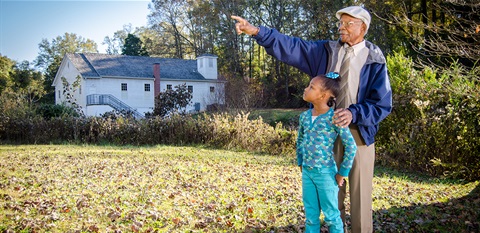
While Pendleton's early narrative has often focused on its prominent white settlers, the town's history is also deeply rooted in the lives, labor, and legacies of African Americans—both enslaved and free.
Many of the grand homes built by Lowcountry planters in and around Pendleton were constructed and maintained by enslaved African Americans, who played a vital role in the agricultural economy and domestic life. Enslaved workers labored not only in the fields and households but also in skilled trades, helping to shape the architectural and economic landscape of the area.
After Emancipation, African American residents of Pendleton began to establish their own institutions and communities. Churches such as Silver Spring Baptist Church and Piney Grove A.M.E. Church became central to Black life, serving as places of worship, education, and civic organization. Education was a priority for the Black community, and several schools were established during Reconstruction and beyond, despite limited resources and pervasive discrimination.
During the Jim Crow era, African Americans in Pendleton faced systemic challenges, including segregation and disenfranchisement. Yet they continued to contribute to the town’s cultural, civic, and economic development. Many families built thriving neighborhoods, created businesses, and advocated for civil rights and equal opportunity.
Today, the African American community continues to play an important role in Pendleton's growth and vibrancy. Efforts to preserve Black heritage sites and to document untold stories are underway, adding essential chapters to the town’s rich and complex history.
As Pendleton reflects on its past, it moves forward with a more inclusive understanding—one that honors the full range of people who have helped shape the town into what it is today.
Timeline
1790-1850
- Village of Pendleton formed and designated as courthouse site. Commercial, religious and public buildings emerge.
- Circulating library formed with public money.
- Pendleton Farmers’ Society founded.; Farmers’ Hall constructed.
- John C. Calhoun and Samuel Maverick settle in Pendleton.
1851-1900
- Blue Ridge Railroad connects Pendleton to Anderson; rail line later abandoned due to lack of funds and fiscal malfeasance.
- Hunters’ Store and Warehouse constructed.
- The Adger family from Charleston acquires Woodburn, Ashtabula & Riveli plantations as Civil War refuges.
- Sherman’s troops come through Pendleton in search of Jefferson Davis and the Confederate treasury.
1901-1972
- SC Hwy through Pendleton widened, paved and re-routed impacting town square and historic buildings.
- Milliken builds two new plants in the area.
- US 76 bypasses Pendleton, preserving its historic square. Tri-County College founded.
- Pendleton Historic District listed on the National Register of Historic Places; Ashtabula and Woodburn individually listed and opened as house museums.
Photo Gallery
Short Documentary on Woodburn
Phillip Cheney Civil War Singers
Jane Edna Hunter Documentary Trailer
Short Documentary on Astabula
Pendleton Life after the Civil War